



Pi Network offers a mobile participation model, not Bitcoin mining performed by a phone. The useful questions are what the app records, which balance has actually migrated to Mainnet, and what you can do with the transferable amount. A number increasing inside an app is only one part of that story.
Our view: Pi can interest people curious about a mobile-first crypto ecosystem, provided they understand verification, migration and wallet control. We would explore it as a project, without assigning a guaranteed cash value to every unit displayed in the app.
Documentary review, updated October 9, 2026. We reviewed public documentation; no Pi mining session, identity verification, migration, purchase or withdrawal was tested. Our invitation code is webmonnaie and can benefit the inviter under the program’s rules.
Mobile Pi participation is not Bitcoin mining.
Check KYC, checklist and migration status.
Distinguish locked and transferable wallet balances.
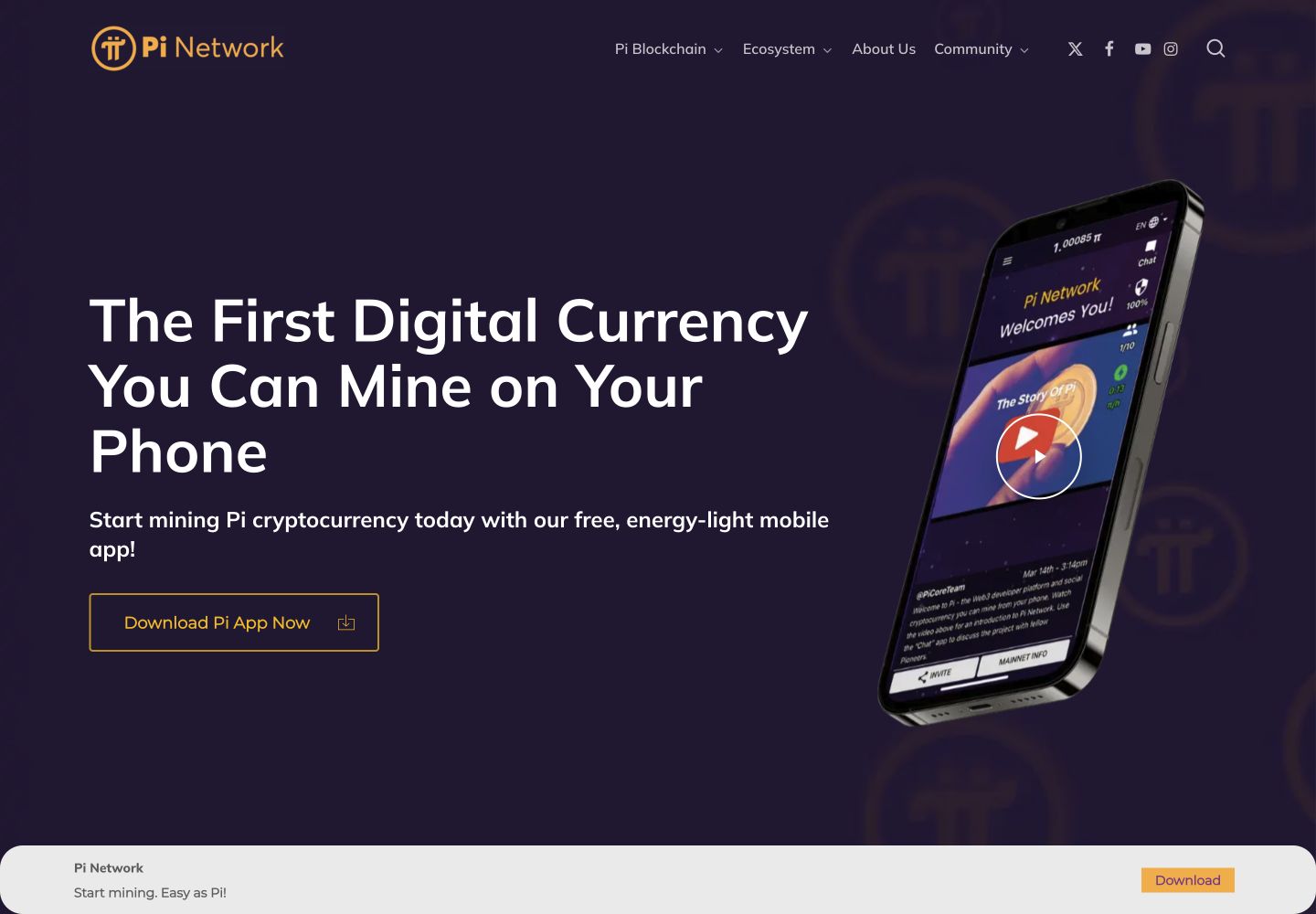
What Pi is—and what it is not
The Pi app uses “mining” for its participation and allocation mechanism. It is not turning your smartphone into a competitive SHA-256 Bitcoin miner. Mobile participation and the work involved in operating network nodes should also be distinguished.
Pi’s Open Network phase has launched, enabling external connectivity. That makes older descriptions claiming that Pi is simply waiting for all external connectivity to begin incomplete. It does not mean every app balance is immediately transferable or that every user has completed the required steps.
For a comparison with conventional mining, read our PC and Mac mining guide. For native assets and networks, see Bitcoin versus altcoins.
Follow the balance through its different stages
| Stage | What to inspect | What not to assume |
|---|---|---|
| Mobile app balance | The amounts and categories shown for your account. | That the entire displayed total is transferable. |
| KYC and checklist | Your actual verification status and outstanding steps. | That submitting documents equals completed approval. |
| Mainnet migration | The amount migrated and its recorded status. | That approval instantly moves every future reward. |
| Available wallet balance | Locked versus available units and wallet access. | That a locked balance can be spent immediately. |
These distinctions are more useful than multiplying an app total by a quoted exchange price. The amount eligible to migrate, the amount already migrated and the amount currently unlocked can be different.
Use the account’s own checklist and records rather than an old universal migration deadline. Verification and transfer rules have changed over the project’s development, and a generic tutorial cannot determine an individual user’s status.
KYC, migration and lockups
Pi documentation describes identity verification and Mainnet migration as requirements for moving eligible mobile-earned balances into the network’s on-chain environment. Completing a form is not the same as receiving final approval, and some cases need additional steps.
Review lockup choices carefully. Committing units for a period affects when they are available, even if a participation rate or incentive looks appealing. Decide whether you understand the actual restriction before confirming it; do not treat a larger displayed earning rate as a cash return.
Identity verification also means deciding whether you are comfortable with the requested personal-data process. Use the genuine app and its intended flow, and do not submit documents to someone offering a shortcut through a private message.
Wallet access deserves separate attention
A network wallet and an app account do different jobs. Protect the wallet’s passphrase or recovery information and understand which interface is asking you to use it. A support contact or promoter does not need your full secret phrase to explain a migration status.
Before transferring, identify the genuine network and the receiving service’s supported deposit route. A similar ticker or project name does not prove compatibility. Check any minimum, memo or additional instruction required by the destination.
Our wallet and keys guide introduces the underlying security habits. An invitation code is public; a wallet secret is not.
What Open Network changes
External connectivity allows broader interaction, but using a third-party exchange or service remains a separate decision. Pi publishes a list of businesses that have completed its KYB process. Consult the current project information rather than relying on a logo in an old tutorial.
KYB status should not be confused with a guarantee of a trading venue’s solvency, legal availability in your country or a profitable price. Examine deposit support, actual liquidity, fees and withdrawal conditions before transferring any available Pi.
A listed market price is not a promise that your whole app balance can be sold at that price. You first need eligible transferable units and an executable route, and you still face price and platform risk.
Join with the invitation code webmonnaie
If you choose to explore Pi, our existing invitation code is webmonnaie. The button below uses the established BitcoinLink route; enter the code exactly if the app asks for an inviter. It identifies the invitation relationship, not a guaranteed signup bonus or approval outcome.
We would start by understanding the app, privacy conditions and Mainnet checklist before inviting other people. Explain the limits to friends instead of presenting an estimated future value as money already earned.
Keep your own record of account progress and wallet access. If a migration is pending, use the status shown in the authenticated app and its official support information rather than paying a third party to “speed it up.”
How we would evaluate the experience
Pi’s appeal is accessibility: exploring a crypto ecosystem does not require setting up a conventional mining rig. Its limitations are the dependence on verification and migration steps, possible lockups, uncertain market outcomes and the attention required to follow changing rules.
Compare it with Bee Network to understand another mobile participation model, while keeping their assets and withdrawal mechanisms separate. If your goal is acquiring BTC rather than learning about Pi, use the Bitcoin buying guide instead.
Frequently asked questions
Does the Pi app mine Bitcoin?
No. Pi participation is a different mechanism and asset. It does not make your phone a Bitcoin mining rig.
Has Pi Open Network launched?
Yes, the project announced its launch. External connectivity does not make every user’s mobile balance automatically migrated or unlocked.
Is my whole app balance spendable?
Not necessarily. Check eligibility, verification, migration, lockups and the available balance in your Mainnet wallet.
What is BitcoinLink’s invitation code?
The code is webmonnaie. An invitation does not guarantee verification, migration, a cash payout or a particular market value.
Should I share my wallet passphrase with support?
No. Keep wallet recovery information secret and use the genuine app and wallet flow. An inviter should never need it.
Can I value my app balance using an exchange price?
That can be misleading. First establish which units are transferable and unlocked, then evaluate the actual market, supported network and transaction costs.